BDA testing
Annual BDA testing, from the building side
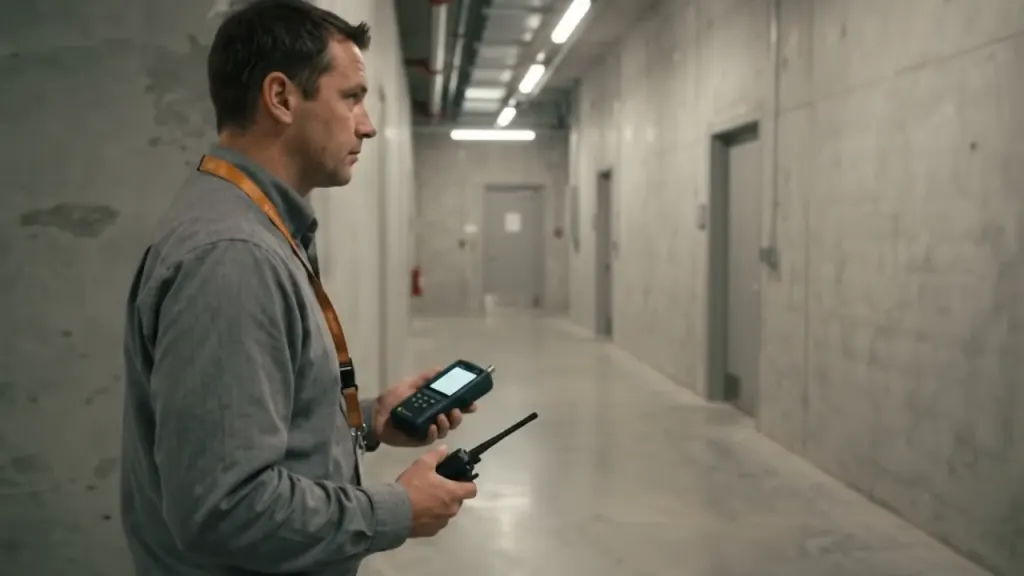
Once a year someone walks every floor with a radio and a meter, load-tests the batteries and checks the amplifier against the numbers from the day it was accepted. Here is what that day looks like, what usually fails, and how to make it go well.
Which rules your test follows
Two model documents describe the annual test, and your jurisdiction adopts one or both, often with its own changes:
- The International Fire Code (IFC), section 510. The model fire code published by the International Code Council. States and cities adopt it by edition, often with local amendments.
- NFPA 1225 (2022). The National Fire Protection Association standard that took over NFPA 1221 in 2021. Its first edition "consolidates NFPA 1061 ... and NFPA 1221 ... into a single standard" (NFPA 1225, Origin and Development).
Florida uses its own Florida Fire Prevention Code, which is built on NFPA documents. Miami-Dade Fire Rescue's current test checklist says it is "Based on NFPA 1221 2019 Ed, Florida Fire Prevention Code - Eighth Edition." So the edition matters: the numbers below can differ in your building. Your fire marshal has the final word, and you can look up local rules on ERRCSCheck's requirements hub.
The testing year
Read your BDA year like a clock
- Acceptance test, onceAfter installation. Keep the amplifier gain values; lose them and you can be required to rerun it.IFC 510.5.4 item 6
- Your reminderBDACheck emails you 14 to 90 days before the test, your choice, so there is time to book a tester.
- Annual testEvery 12 months: coverage walk, gain check, battery load test, active components, oscillation check.IFC 510.6.1; NFPA 1225 20.3.10
- Report to the fire marshalThe written report goes to the fire code official after the test. Some cities set a deadline.IFC 510.6.1
- After structural changesAdditions and remodels that could change coverage need a test too, whatever the date.IFC 510.6.1
- Florida re-assessment limitsNo more than once every 3 years for high-rises and buildings over 12,000 sq ft, 5 years for others, with exceptions.F.S. 633.202(18)(c)2
What the tester checks
The model fire code lists four parts to the annual test (IFC 510.6.1):
| Check | What happens | Why it matters |
|---|---|---|
| Coverage walk | Each floor is divided into a grid and a radio test is made at the center of each area | Proves firefighters can talk from every part of the building |
| Amplifier gain | The BDA's gain is compared with the value recorded at acceptance | Drift means something changed: an antenna, a cable or the outside signal |
| Battery load test | Backup batteries and power supplies run under load for at least 1 hour | Proves the system will run when the building loses power |
| Active components | Every powered part is checked against the manufacturer's specifications | Catches failing parts before they fail |
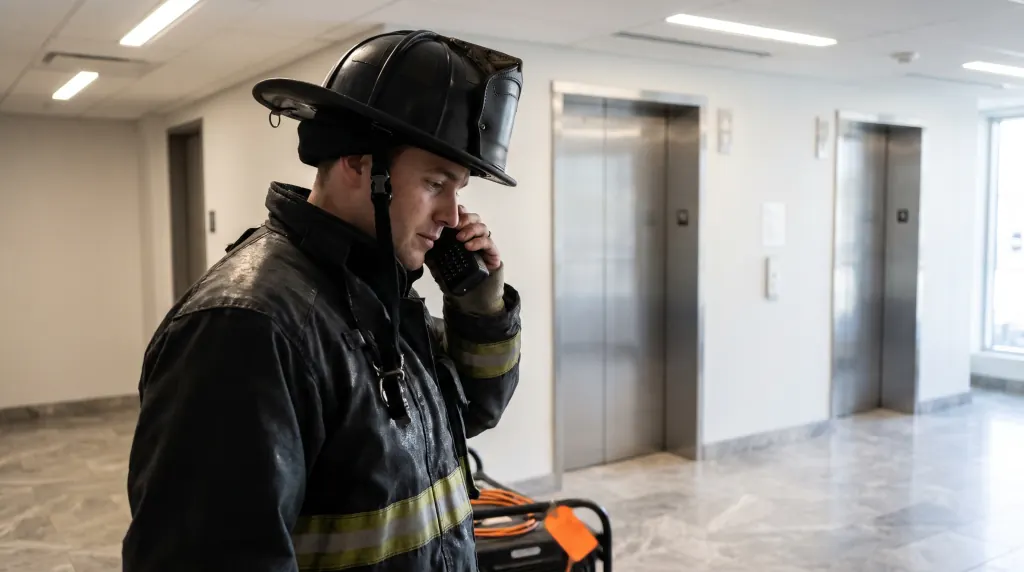
During the annual inspection, test equipment such as a spectrum analyzer is also used "to ensure spurious oscillations are not being generated by the subject signal booster" (IFC 510.5.4 item 7). Oscillation is feedback between the outdoor and indoor antennas, and it can jam the very radio system the BDA is meant to help.
How the coverage grid works
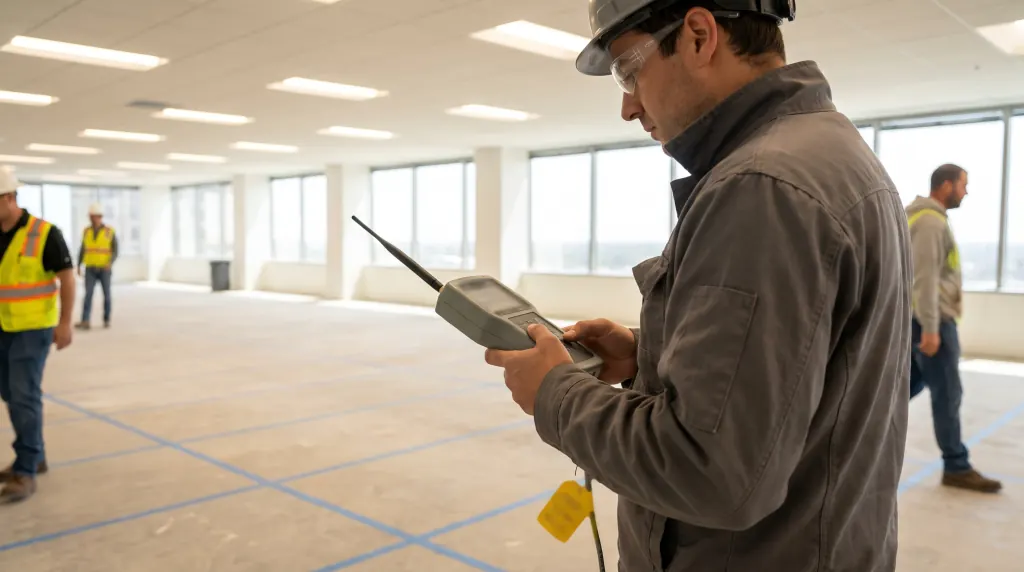
The model code's procedure (IFC 510.5.4):
- Each floor is divided into 20 roughly equal test areas.
- The test uses a calibrated portable radio of the type the agency uses, talking through the agency's own system.
- More than one failed area fails the floor. If exactly two areas fail, the floor may be re-divided into 40 areas, and it passes if no more than two non-adjacent areas fail.
- One test spot near the center of each area represents the whole area. Trying again a few feet away is not allowed.
- Voice quality is checked with two radios keyed at the same time on different channels, one within 10 feet of an indoor antenna and one as far from any antenna as possible.
NFPA 1225's guidance describes a similar 20-cell grid, with cells between 20 and 80 feet across, and splitting floors over 128,000 square feet into sectors (NFPA 1225 A.20.3.10).
Test day
How the coverage grid is walked
- 20 roughly equal areasThe tester divides each floor into a grid and walks it, using a calibrated radio of the type the agency uses.IFC 510.5.4
- A test at each centerOne spot near the center stands for the whole area. Trying again a few feet away is not allowed.
- One failure allowedMore than one failed area fails the floor. With exactly two, the floor can be re-divided into 40 areas and passes with no more than two non-adjacent failures.IFC 510.5.4
- Critical areasStairs, elevators and elevator lobbies need 99 percent. General areas need 95 percent in the IFC and NFPA 1225; Miami-Dade uses 90.IFC 510.4.1; NFPA 1225 18.8.3, 18.8.4
What passes
| Measure | IFC 510 | NFPA 1225 (2022) | Miami-Dade acceptance test |
|---|---|---|---|
| Critical areas covered | 99% (510.4.1) | 99% (18.8.3) | 99% |
| General building areas covered | 95% (510.4.1) | 95% (18.8.4) | 90% |
| Minimum inbound signal | -95 dBm (510.4.1.1) | Set by the AHJ | -95 dBm with DAQ 3.0 |
| Voice quality, both directions | DAQ 3.0 or equivalent (510.4.1.1, 510.4.1.2) | DAQ 3.0 (18.9.1, 18.9.2) | DAQ 3.0 |
| Battery runtime | 12 hours at 100% capacity (510.4.2.3) | 12 hours at 100% capacity (18.13.2) | Low-battery alarm at 70% of 12 hours used |
Critical areas under NFPA 1225 include the fire command center, fire pump room, exit stairs, exit passageways, elevators, elevator lobbies, standpipe cabinets and sprinkler sectional valve locations, plus any area your fire marshal adds (18.8.3). Miami-Dade also treats elevator shafts as critical in buildings of six stories or more, and in shorter buildings that lack signal in areas other than the elevator shaft (Miami-Dade County Code Sec. 14-69(D), quoted in the MDFR guideline).
DAQ (delivered audio quality) is a 1 to 5 scale of how well speech comes through. DAQ 3 means "speech understandable with slight effort. Occasional repetition required" (NFPA 1225 A.20.3.10).
What usually makes a test fail
From the checks above, a test fails when a floor has more failed grid areas than allowed, a critical area such as a stairwell or elevator lobby has no usable signal, the battery cannot carry the load for the hour, the gain has drifted from the accepted value, or the booster is oscillating. Our page on common BDA failures walks through the causes and fixes.
How to prepare
Two to four weeks ahead:
- Find the last annual report and the acceptance test report with the original gain values. Send both to the tester.
- Confirm the tester's credentials meet your fire marshal's rules.
- List every construction project since the last test: new walls, ceilings, roof work, window replacement, tenant build-outs.
- Check the annunciator and fire alarm panel for any open BDA trouble, and fix it first.
The week of the test:
- Arrange access to every area: stairwells, roof, elevator machine rooms, pump room, electrical and telecom closets, parking levels, locked tenant spaces. Miami-Dade, for example, requires on-site staff "with access to all areas/doors/elevators" who know the floor plan.
- Tell your fire alarm monitoring company that BDA trouble signals are expected during the battery test.
- Have elevators available for the tester.
Use our printable inspection checklist to keep track.
Test day, stop by stop
What happens on BDA test day
What the tester does, what you do and what to have ready. Use the arrow keys to move between stops.
1. 2 weeks before
Book the tester and send the records
What happens. You book a tester your fire marshal approves, or one with the credentials it requires.
What you do. Send the tester the last annual report, the acceptance test gain values and a list of renovations, roof work and window replacements since the last test.
Have ready
NFPA 1225 20.3.10; IFC 510.5.3; IFC 510.5.4 item 6; IFC 510.6.1
2. Day before
Clear the way
What happens. Open trouble signals are fixed so they do not hide a real failure on test day.
What you do. Tell the monitoring company to expect BDA trouble signals during the battery test. Line up keys, cards and an escort for every area, and make the elevators available.
Have ready
Suggested; Miami-Dade requires access to all areas for its tests
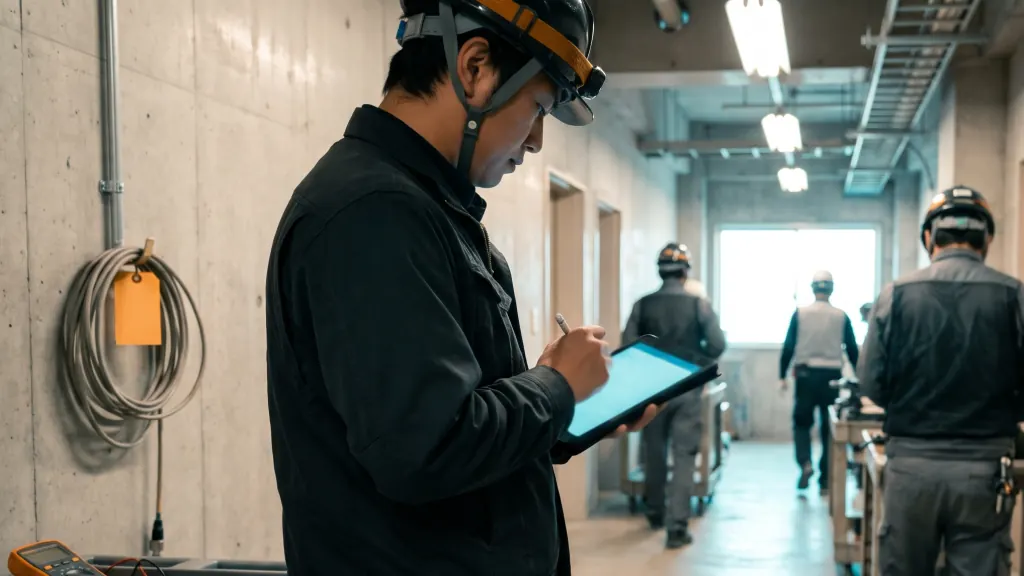
3. Arrival
Walk the plan with the tester
What happens. The tester reviews the as-built drawings and the last report and confirms which areas need an escort.
What you do. Have the as-built drawings on hand and name one person who can open every door all day.
Have ready
IFC 510.4.2.7; NFPA 1225 20.3.10.1.3
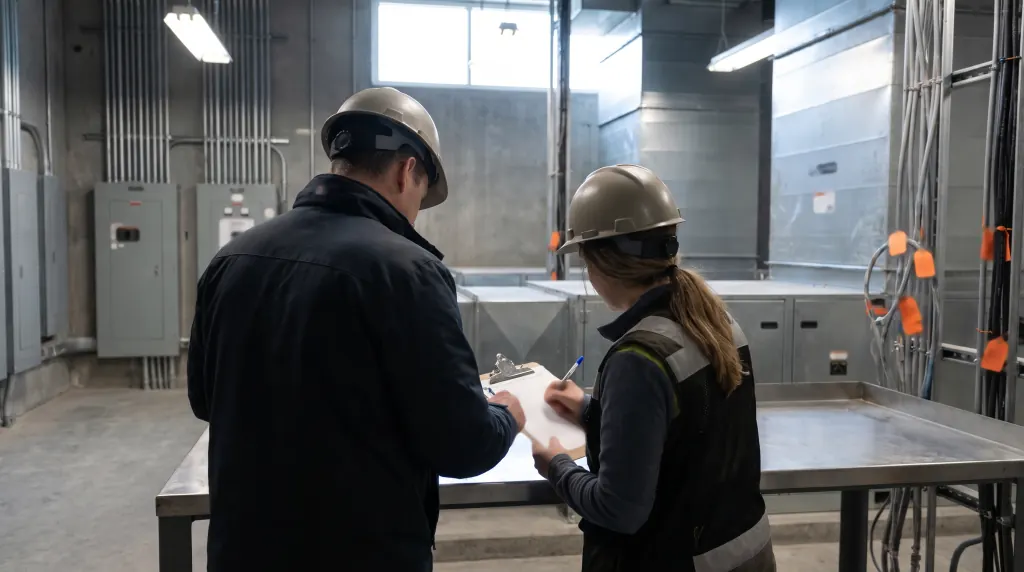
4. Equipment room
Check the amplifier
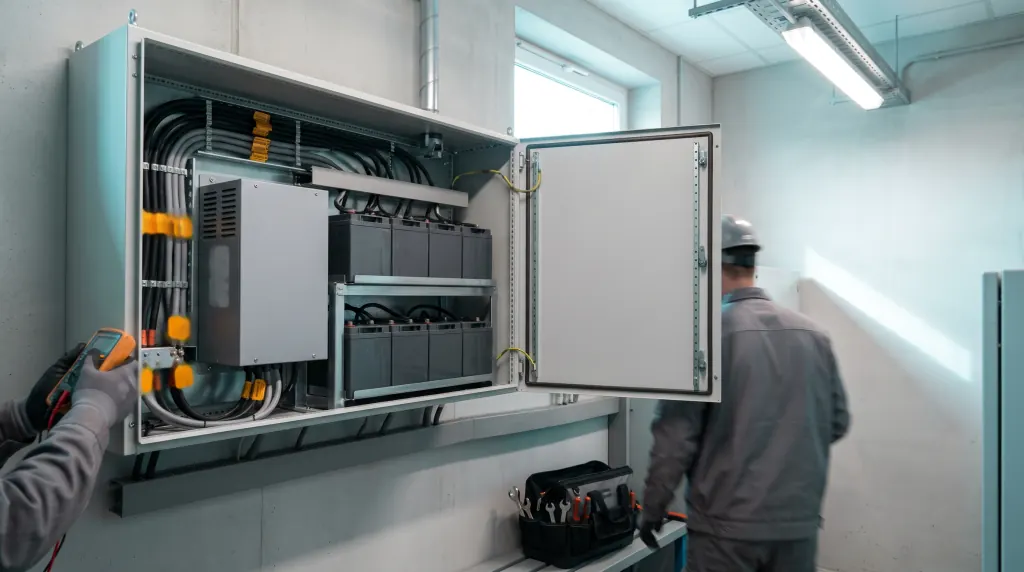
What happens. The tester compares amplifier gain with the acceptance values, checks every active component against the manufacturer's specifications and looks for oscillation with a spectrum analyzer.
What you do. Open the BDA and battery cabinets. Keep the room clear; it should not be used for storage.
Have ready
IFC 510.6.1 items 2 and 4; IFC 510.5.4 items 6 and 7
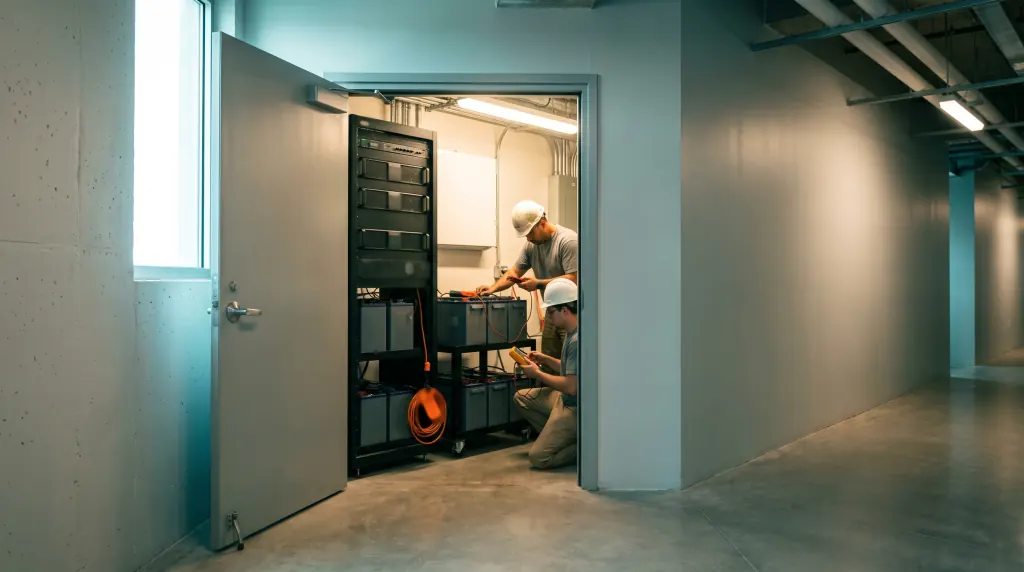
5. Grid walk
Test every floor
What happens. A grid coverage test on every floor, 20 areas per floor, with a calibrated radio through the agency's system.
What you do. Keep the escort moving ahead of the tester so no floor is skipped for lack of a key.
Have ready
IFC 510.6.1 item 1; IFC 510.5.4
6. Critical areas
The places firefighters work from
What happens. The fire command center, pump room, exit stairs, elevators, elevator lobbies and standpipe and valve locations are tested to their higher standard.
What you do. Make sure each of these is unlocked and reachable, including the elevator cars.
Have ready
NFPA 1225 18.8.3
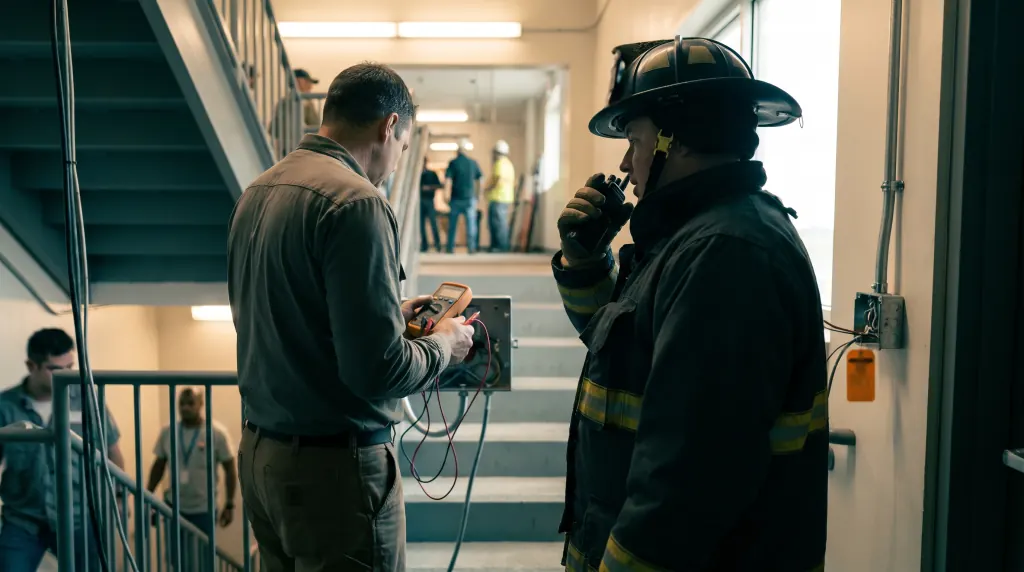
7. Radio check
Signal checks on the public safety system
What happens. Every radio system your fire marshal lists has to work in the building. Some fire departments check it themselves; Miami-Dade, for example, tests both its 450 MHz fire and 800 MHz police systems.
What you do. Ask your fire marshal's office ahead of time whether it will attend or wants its own test.
Have ready
MDFR General Guidelines for BDAs (Miami-Dade)
8. Battery and alarms
Prove it runs on backup
What happens. Batteries and power supplies are tested under load for at least 1 hour, longer if the battery shows signs of failure. Trouble and supervisory signals are confirmed at the fire alarm panel and the annunciator.
What you do. Watch the fire alarm panel with the tester and note every signal that comes in.
Have ready
IFC 510.6.1 item 3; signals per NFPA 1225 18.14 (suggested check)
9. Report and sign-off
Close it out on paper
What happens. The test is documented and signed by the approved tester, and the report goes to the fire code official.
What you do. Get the full written report with results per floor, gain readings and the battery test. Any failure gets a written repair scope and a retest date. File it, and set the next reminder.
Have ready
NFPA 1225 20.3.10; IFC 510.6.1
After the test
- Get the full written report, not just a pass or fail. It should include the grid results per floor, the gain readings and the battery test.
- Make sure the report reaches the fire marshal. Under the model code the owner's side is responsible for submitting it (IFC 510.6.1).
- If anything failed, get a written repair scope and a retest date.
- File the report with your other records and log the date in your BDACheck reminder so next year's reminder is right.
Tests outside the annual cycle
The model code also requires a test "where structural changes occur, including additions or remodels that could materially change the original field performance tests" (IFC 510.6.1). In Florida, the fire marshal may require a coverage assessment every 3 or 5 years depending on the building, and sooner after a Level III alteration, reconstruction or a reported radio failure (F.S. 633.202(18)(c)2). Details: Florida re-test schedule.
Confirm the schedule and pass criteria with your fire marshal (AHJ) before you book the test.
Free test reminder
Never miss the next BDA test
Add your building once and we email you before the next test is due. It is free, and setting a reminder never shares your details with an installer. Need a new system or a repair? Ask ERRCSCheck for up to 3 quotes.
Questions people ask
Is the annual BDA test required by law?
It is required by the model fire codes that states and cities adopt. The International Fire Code requires the owner to have the system "inspected and tested annually" (IFC 510.6.1), and NFPA 1225 requires a documented test "once every 12 months" (NFPA 1225 20.3.10). Which code applies to your building, and in which edition, is set by your state and your fire marshal.
Who is allowed to do the test?
NFPA 1225 says the test must be "conducted, documented, and signed by a person approved by the AHJ" (20.3.10). Ask your fire marshal whether it keeps a list of approved testers or requires specific credentials.
Do we send the report to the fire marshal?
Under the model fire code, yes. "At the conclusion of the testing, a report, which shall verify compliance with Section 510.5.4, shall be submitted to the fire code official" (IFC 510.6.1). Some jurisdictions use an online portal; ask yours.
How long does the battery test take?
At least one hour under load. If the battery shows signs of failure during that hour, the test is extended in one-hour blocks until its condition is clear (IFC 510.6.1 item 3).
We lost the original acceptance test report. Is that a problem?
It can be. The model code says the amplifier gain values from acceptance must be kept on file with the owner, and if they are lost "the building owner shall be required to rerun the acceptance test" (IFC 510.5.4 item 6). Ask your installer for a copy before you need it.
Sources
Primary documents we read for this page. Rules change; confirm with your fire marshal (AHJ).
- International Fire Code Section 510, Emergency Responder Communication Coverage, City of Eaton, Ohio (reproducing ICC model code text; edition not stated in the document)
- NFPA 1225, Standard for Emergency Services Communications, 2022 Edition: Chapter 18 and section 20.3.10, Georgia Office of Insurance and Safety Fire Commissioner (reproducing NFPA text)
- General Guidelines for the Deployment of Two-Way Radio Communication Enhancement System (BDAs), Miami-Dade County Fire Prevention Division
- Two-Way Radio Communications Enhancement Systems: BDA Installation and Testing, Miami-Dade Fire Rescue
- Florida Statutes 2026, section 633.202, subsection (18), The Florida Senate
Related
BDA inspection checklist for building managers
A printable BDA / ERRCS checklist for building managers - records to keep, a monthly look, test prep, what the tester must do and follow-up - with code references.
Five ways a BDA system fails, and how each gets fixed
Five BDA / ERRCS failures the fire codes test for - weak batteries, oscillation, a moved donor antenna, renovations, radio system changes - with causes and fixes.
How often Florida can require a radio coverage re-test
Florida caps how often a fire marshal can require a new radio coverage assessment: every 3 or 5 years, with exceptions. What managers should plan for.
What a BDA system costs to install and keep running
BDA / ERRCS costs from published records only - Florida installation figures and fire department fees - plus what drives the price of tests, monitoring and repairs.