Free for building and facilities managers
Never miss your building's BDA test
The radio system firefighters rely on in your building has to be tested every year under the model fire code (IFC 2021 510.6.1), and your fire marshal sets the details. Add your building once. We email you before the next test is due and keep the test history in one place.
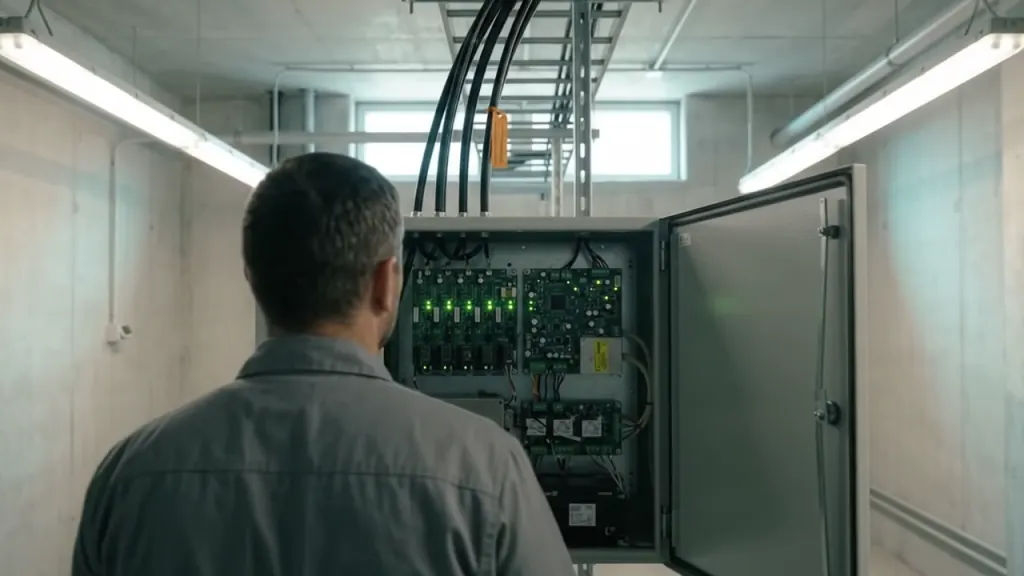
- 01Add your buildingName, city and the date of your last BDA test.
- 02Confirm by emailOne click. Nothing else is sent until a test is near.
- 03Get the reminder30 days ahead by default, with your test history attached.
Why buildings fall behind
BDA systems sit in a closet and work quietly until a firefighter needs them. Test dates live on a sticker, in a vendor's inbox or with a manager who has moved on. When the fire marshal asks for the last report, nobody can find it. BDACheck keeps the date and the history in one place and tells you before the next test is due.
The testing year
Read your BDA year like a clock
- Acceptance test, onceAfter installation. Keep the amplifier gain values; lose them and you can be required to rerun it.IFC 510.5.4 item 6
- Your reminderBDACheck emails you 14 to 90 days before the test, your choice, so there is time to book a tester.
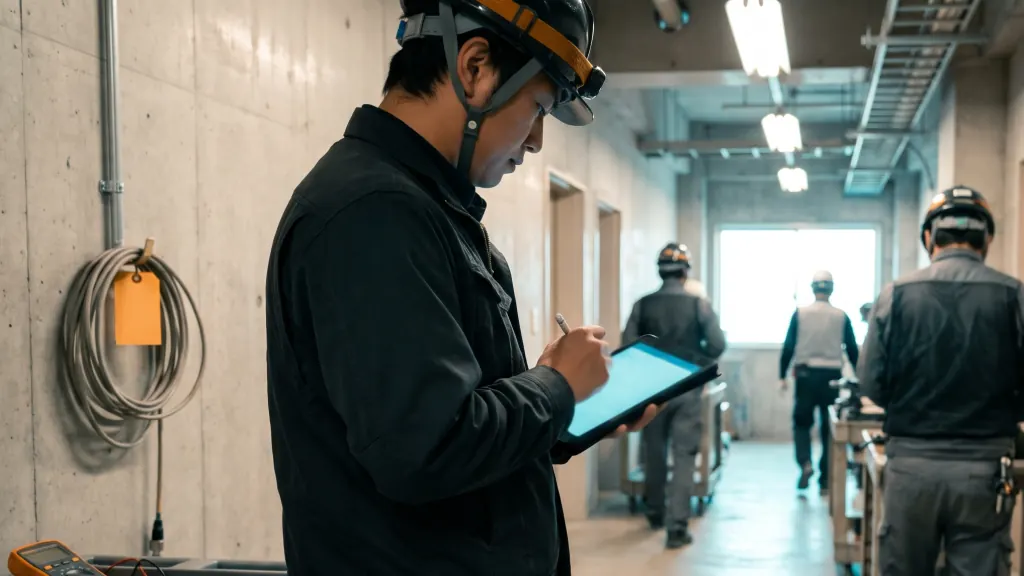
- Annual testEvery 12 months: coverage walk, gain check, battery load test, active components, oscillation check.IFC 510.6.1; NFPA 1225 20.3.10
- Report to the fire marshalThe written report goes to the fire code official after the test. Some cities set a deadline.IFC 510.6.1
- After structural changesAdditions and remodels that could change coverage need a test too, whatever the date.IFC 510.6.1
- Florida re-assessment limitsNo more than once every 3 years for high-rises and buildings over 12,000 sq ft, 5 years for others, with exceptions.F.S. 633.202(18)(c)2
What you get
- A reminder before every test, 14 to 90 days ahead, your choice.
- A test log for the building: date, test type, vendor and result, so the next manager inherits it.
- Plain guides to what a test involves, what it costs and what to keep on file, each one citing the code or rule it comes from.
How reminders work
Set it once. We watch the date.
- Add your buildingOne form per building, with the date of its last test.
- Confirm by emailOne click switches the reminder on. Nothing is shared with installers.
- Reminder before it is due14 to 90 days ahead, your choice, so there is time to book a tester.
- Log the testDate, test type, vendor and result go in the building's private test log.
- Next date movesThe schedule rolls forward and the next manager inherits the history.
Guides for the people who run the building
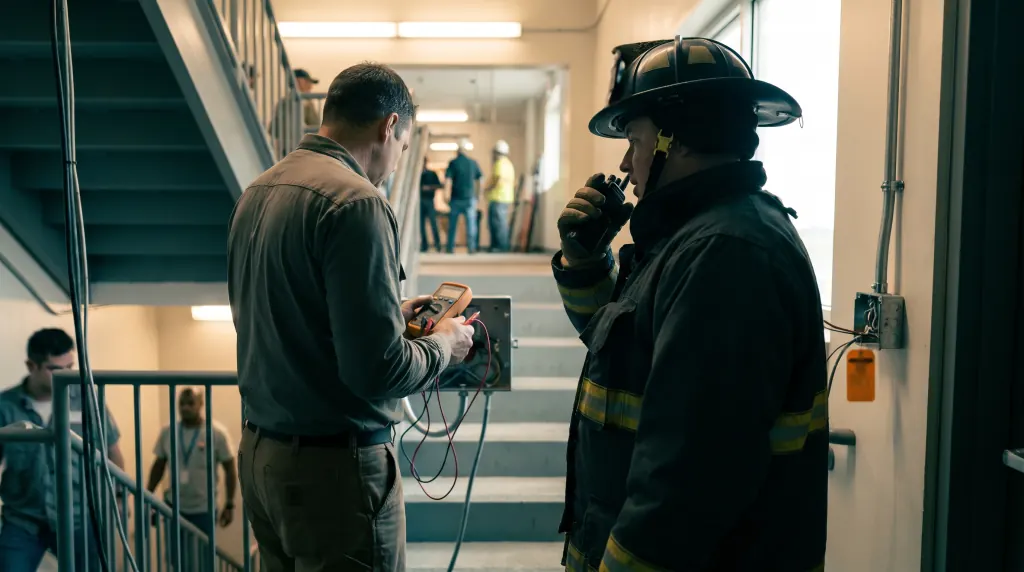
Test day, stop by stop
What happens on BDA test day
What the tester does, what you do and what to have ready. Use the arrow keys to move between stops.
1. 2 weeks before
Book the tester and send the records
What happens. You book a tester your fire marshal approves, or one with the credentials it requires.
What you do. Send the tester the last annual report, the acceptance test gain values and a list of renovations, roof work and window replacements since the last test.
Have ready
NFPA 1225 20.3.10; IFC 510.5.3; IFC 510.5.4 item 6; IFC 510.6.1
2. Day before
Clear the way
What happens. Open trouble signals are fixed so they do not hide a real failure on test day.
What you do. Tell the monitoring company to expect BDA trouble signals during the battery test. Line up keys, cards and an escort for every area, and make the elevators available.
Have ready
Suggested; Miami-Dade requires access to all areas for its tests
3. Arrival
Walk the plan with the tester
What happens. The tester reviews the as-built drawings and the last report and confirms which areas need an escort.
What you do. Have the as-built drawings on hand and name one person who can open every door all day.
Have ready
IFC 510.4.2.7; NFPA 1225 20.3.10.1.3
4. Equipment room
Check the amplifier
What happens. The tester compares amplifier gain with the acceptance values, checks every active component against the manufacturer's specifications and looks for oscillation with a spectrum analyzer.
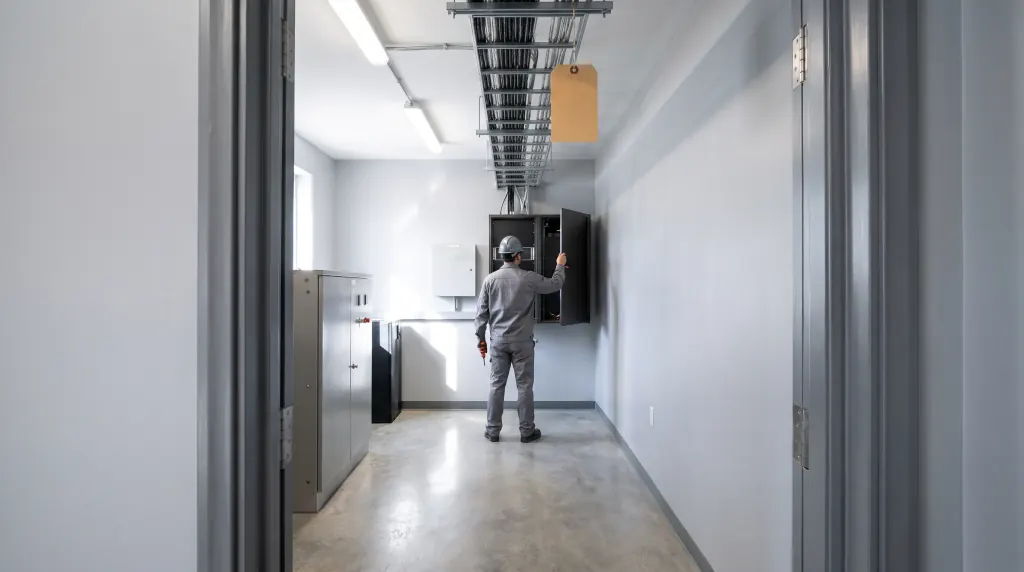
What you do. Open the BDA and battery cabinets. Keep the room clear; it should not be used for storage.
Have ready
IFC 510.6.1 items 2 and 4; IFC 510.5.4 items 6 and 7
5. Grid walk
Test every floor
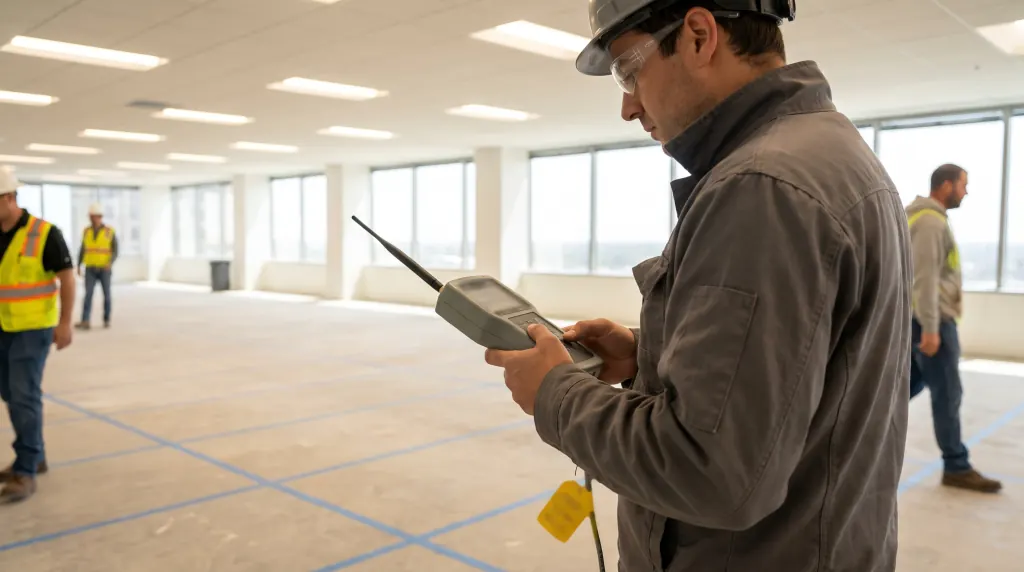
What happens. A grid coverage test on every floor, 20 areas per floor, with a calibrated radio through the agency's system.
What you do. Keep the escort moving ahead of the tester so no floor is skipped for lack of a key.
Have ready
IFC 510.6.1 item 1; IFC 510.5.4
6. Critical areas
The places firefighters work from
What happens. The fire command center, pump room, exit stairs, elevators, elevator lobbies and standpipe and valve locations are tested to their higher standard.
What you do. Make sure each of these is unlocked and reachable, including the elevator cars.
Have ready
NFPA 1225 18.8.3
7. Radio check
Signal checks on the public safety system
What happens. Every radio system your fire marshal lists has to work in the building. Some fire departments check it themselves; Miami-Dade, for example, tests both its 450 MHz fire and 800 MHz police systems.
What you do. Ask your fire marshal's office ahead of time whether it will attend or wants its own test.
Have ready
MDFR General Guidelines for BDAs (Miami-Dade)
8. Battery and alarms
Prove it runs on backup
What happens. Batteries and power supplies are tested under load for at least 1 hour, longer if the battery shows signs of failure. Trouble and supervisory signals are confirmed at the fire alarm panel and the annunciator.
What you do. Watch the fire alarm panel with the tester and note every signal that comes in.
Have ready
IFC 510.6.1 item 3; signals per NFPA 1225 18.14 (suggested check)
9. Report and sign-off
Close it out on paper
What happens. The test is documented and signed by the approved tester, and the report goes to the fire code official.
What you do. Get the full written report with results per floor, gain readings and the battery test. Any failure gets a written repair scope and a retest date. File it, and set the next reminder.
Have ready
NFPA 1225 20.3.10; IFC 510.6.1
Your rules, not ours
How often a building must be tested, and at what signal level, is set by the fire code your state adopts and by your local fire marshal. Florida managers can start with our guide to how often a Florida fire marshal can require a coverage re-test. If your board just received a notice, ERRCSCheck has a plain-English page for condo owners and boards, with requirements for other states and counties, and a printable Board Brief.
Free test reminder
Never miss the next BDA test
Add your building once and we email you before the next test is due. It is free, and setting a reminder never shares your details with an installer. Need a new system or a repair? Ask ERRCSCheck for up to 3 quotes.
Questions people ask
What does the reminder cost?
Nothing. BDACheck is funded by installers who pay WhenLeads for leads from owners who ask for quotes. Setting a reminder never shares your details with an installer.
What is a BDA?
A bi-directional amplifier. It is the core of an emergency responder radio coverage system (ERRCS), which carries fire and police radio signals inside a building where they would otherwise drop out. Our plain explainer covers the parts and who controls them.
How often does a BDA system need testing?
That depends on the fire code your state and city adopt and on your fire marshal. Our annual testing guide quotes the model code rules with their sources, and Florida managers can read the Florida re-test schedule.
Will an installer call me if I use BDACheck?
No. Reminders and guides never share your details. Only if you choose to ask for quotes through ERRCSCheck does your request go to up to 3 vetted installers who serve your area, and even then there are no texts and no cold calls.